
Dermal Fillers 101: What They Actually Treat and How They're Chosen
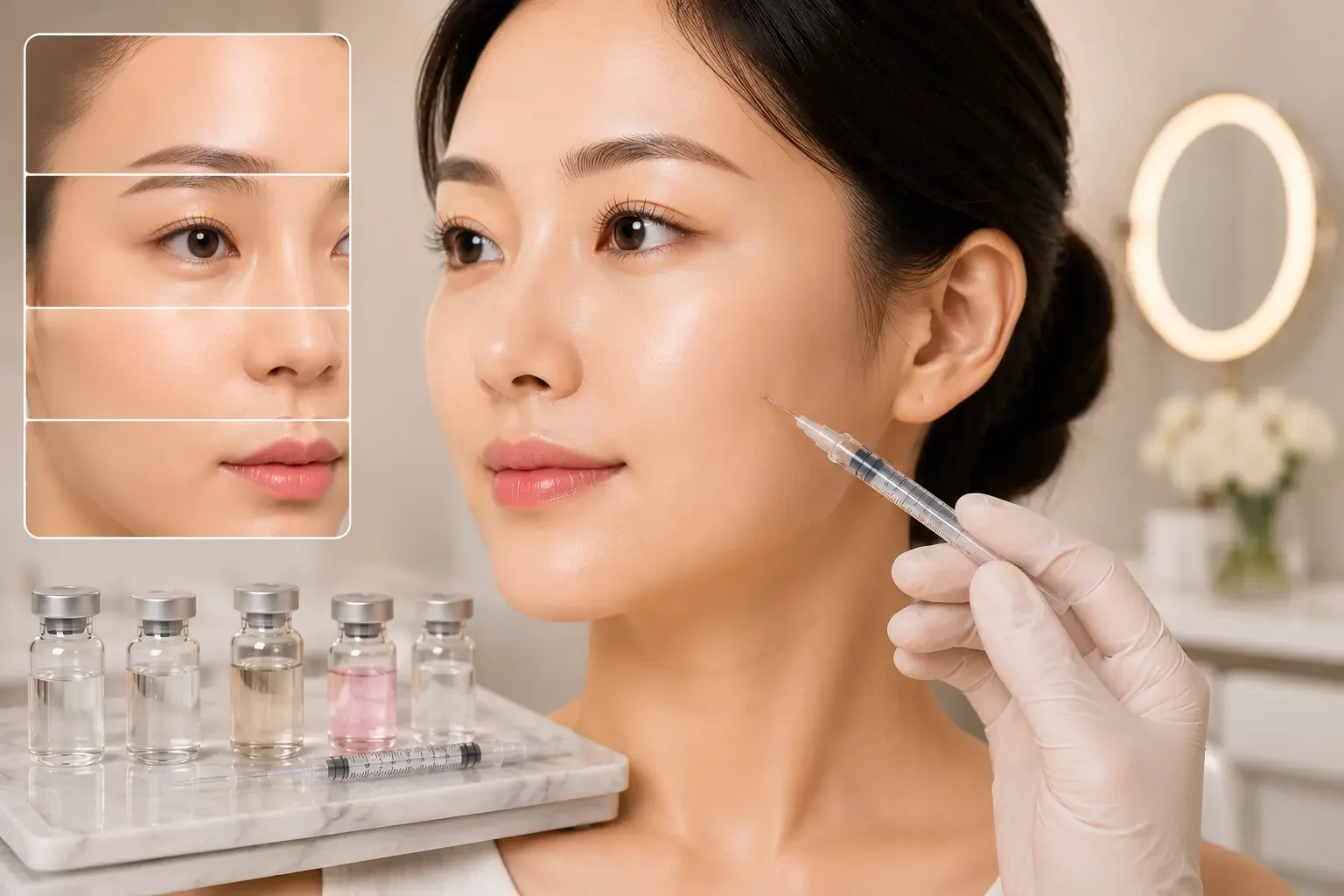
Dermal fillers are injectable gels, most commonly hyaluronic acid-based, used to restore lost volume, soften static lines, and enhance facial contours like the lips, cheeks, and jawline. Unlike skin boosters, which improve hydration and skin quality, fillers physically add structure. The right filler and technique depend entirely on which area you're treating and the result you want.
What a Dermal Filler Actually Does
A dermal filler is an injectable gel used to restore volume, define contours, or soften lines that don't fully resolve at rest. Most fillers used in aesthetic medicine today are made from hyaluronic acid, a substance the body already produces naturally to keep skin hydrated and plump. Because hyaluronic acid fillers are biocompatible and can be dissolved if needed, they've become the standard choice for most facial treatment areas.
It's worth being clear about what a filler is not: it isn't a skin-quality treatment. If your main concern is dullness, dehydration, or overall texture, a skin booster (https://www.seoulekbeauty.com/skin-boosters) is doing a different job than a filler. Fillers add or restore structure; skin boosters improve the quality of the skin itself. Many clients benefit from both, depending on what a consultation identifies as the actual concern.
Common Areas Treated With Dermal Fillers
Fillers are formulated in different thicknesses and cross-linking densities depending on where they're being used, since the tissue demands of the lips are very different from the tissue demands of the cheeks or jawline.
Lips benefit from softer, more flexible filler formulas designed to move naturally with facial expression while adding shape or volume. Cheeks typically use a thicker, more structural filler to restore volume lost with age or to enhance natural contour. The jawline and chin use firmer filler formulations to sharpen definition and improve profile balance. Nasolabial folds and marionette lines, the creases that run from the nose to the mouth and from the mouth to the chin, are treated with mid-density fillers to soften static lines without looking overfilled. Under-eye hollows use a very soft, low-density filler placed carefully to avoid a puffy or unnatural look, since this is one of the more technically demanding areas to treat well.
How a Filler Plan Gets Built
A good filler consultation starts with identifying the actual concern, whether that's lost volume, an asymmetry, a line that bothers you, or a contour you want to enhance, rather than starting from a specific product name. From there, your provider selects a filler formulation matched to that treatment area and injects it using a technique appropriate for the tissue depth and mobility of that region. Conservative, incremental treatment is standard practice: it's far easier to add more filler in a follow-up session than to correct an area that was overfilled initially.
What to Expect During and After Treatment
Most filler appointments begin with topical numbing, since many modern filler formulas also contain lidocaine to minimize discomfort during injection. The treatment itself typically takes twenty to forty-five minutes depending on how many areas are being addressed. Mild swelling, bruising, or tenderness at injection sites is common and usually resolves within a few days to a week, and results are visible immediately, with any residual swelling settling into the final look over the following one to two weeks.
Most hyaluronic acid fillers last anywhere from six months to eighteen months depending on the treatment area, the specific formula used, and individual metabolism, with lip filler generally metabolizing faster than cheek or jawline filler.
Fillers vs. Other Injectables at Seoulé K-Beauty Skin Lab
Because "filler" is often used loosely to describe multiple treatment categories, it's worth distinguishing dermal fillers from the other injectables we offer. Skin boosters like JuveLook and Kiss Injections (https://www.seoulekbeauty.com/blog/juvelook-vs-kiss-injections-san-diego) hydrate and improve skin quality rather than adding structural volume. Rejuran Eye (https://www.seoulekbeauty.com/rejuran-eye) uses PDRN to repair and thicken the delicate under-eye skin rather than fill it. A proper consultation walks through which category actually matches your goal, since choosing the wrong category is the most common reason clients feel disappointed with a treatment that technically "worked" but didn't address what they were actually concerned about.
Choosing a Qualified Provider
Filler results depend heavily on technique and anatomical knowledge, not just the product used. Our providers are trained specifically in facial anatomy and injection technique for each treatment area, which matters most in higher-risk zones like under the eyes and around the nose, where incorrect placement can affect blood flow to surrounding tissue. A thorough consultation, clear communication about your goals, and a conservative first-session approach are the best predictors of a filler result that looks natural.
Signs Filler Might Be the Right Category for You
A few common patterns tend to point toward filler rather than a skin-quality treatment. Lips that have thinned with age or were never as full as you'd like are a straightforward filler candidacy. Cheeks that look flatter than they used to, especially if you notice it more in photos than in the mirror, usually point to volume loss that filler addresses directly. Nasolabial folds or marionette lines that stay visible even when your face is relaxed, not just when you smile, are a classic static-line filler case. A jawline that's lost definition, or a chin that feels recessed relative to the rest of your profile, are both structural concerns filler is well suited to address. If what you're noticing is more about how your skin looks and feels overall, rather than a specific area lacking volume or definition, a skin booster (https://www.seoulekbeauty.com/skin-boosters) may be the more appropriate starting point.
Preparing for a Filler Appointment
A little preparation goes a long way toward a smoother appointment and fewer side effects. Avoiding blood thinners like aspirin, ibuprofen, and fish oil for about a week beforehand, when medically appropriate to do so, can reduce bruising risk. Staying well hydrated in the days leading up to treatment supports better results. Avoiding alcohol the night before also helps minimize bruising. Coming in with a clear idea of what's bothering you, rather than a specific product request, gives your provider the most useful starting point for the consultation, since the right approach is chosen based on your anatomy and goals, not the other way around.
Booking Your Consultation
Every filler treatment at Seoulé K-Beauty Skin Lab starts with a consultation to map out your goals and anatomy before any injection happens. You can learn more about the team performing these treatments (https://www.seoulekbeauty.com/who-we-are) or schedule your consultation (https://www.seoulekbeauty.com/contact-us) to get a personalized recommendation.
FAQs
-
Most modern fillers contain a numbing agent, and providers typically apply additional topical numbing beforehand, so discomfort is generally mild and short-lived. Some areas, like the lips, are more sensitive than others.
-
Most hyaluronic acid fillers last between six and eighteen months, depending on the treatment area and your individual metabolism. Lip filler tends to break down faster than filler placed in the cheeks or jawline.
-
Yes. Hyaluronic acid fillers can be dissolved with an enzyme called hyaluronidase if you're unhappy with the result or need a correction, which is part of why HA fillers are the standard choice for most treatment areas.
-
Results are visible immediately after treatment, though some initial swelling is normal. The final, settled result is usually apparent within one to two weeks.
-
A filler adds structural volume to a specific area, like the lips or cheeks. A skin booster improves the overall quality, hydration, and texture of the skin rather than reshaping a feature. Many clients use both for different goals.
