
DIRECT ANSWER / OVERVIEW PARAGRAPH
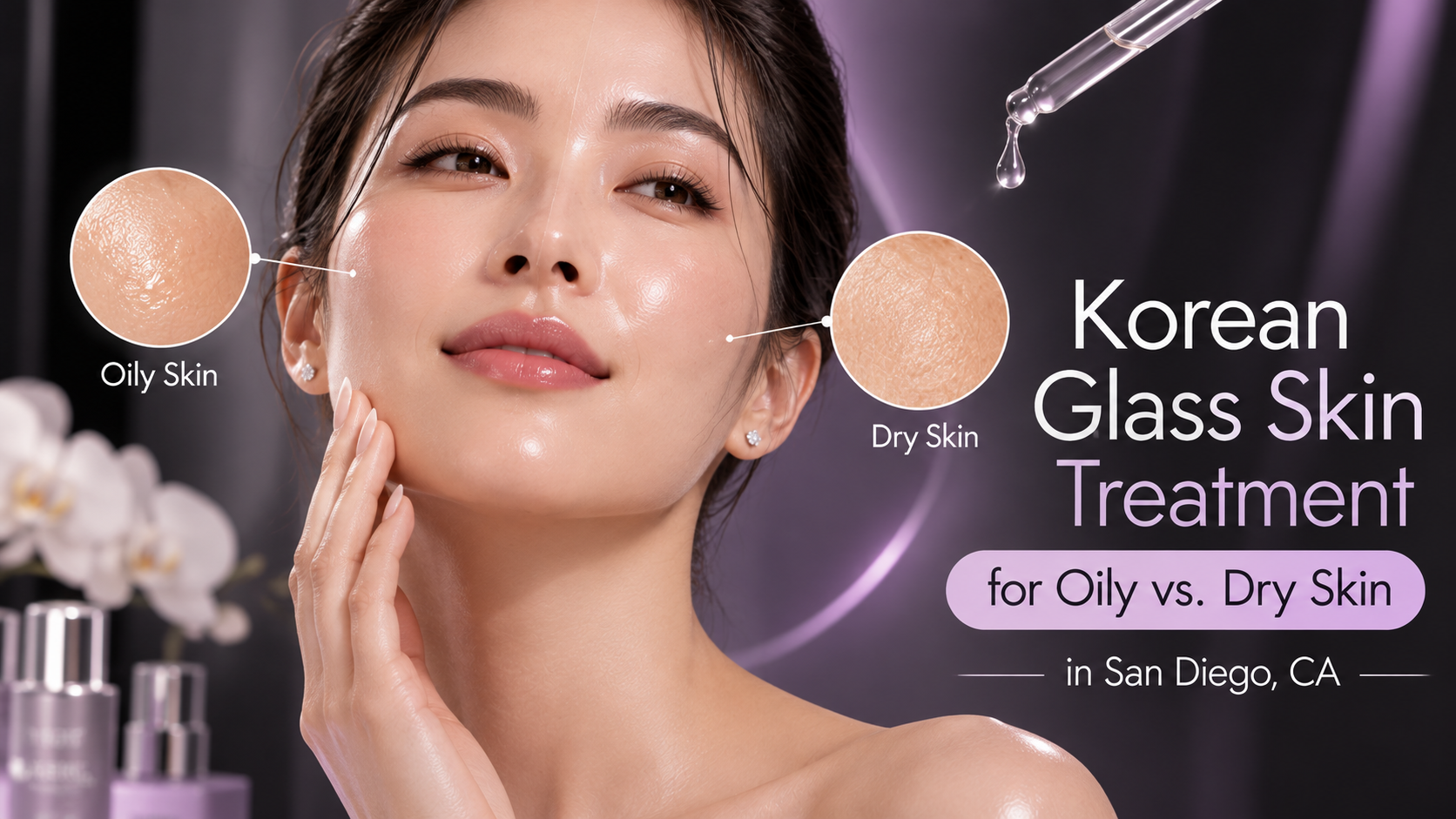
Korean glass skin is achievable for both oily and dry skin, but the treatment plan is different for each. Oily skin usually needs oil control, pore refinement and lightweight hydration, while dry skin needs deep hydration, barrier repair and collagen support. At Seoulé K-Beauty Skin Lab in San Diego, every Korean glass skin treatment is customized to your skin type after a free consultation.
What Glass Skin Actually Means
Glass skin describes a clear, luminous, smooth and dewy complexion that reflects light evenly, like glass. It is a reflection of healthy skin rather than heavy makeup. The look comes from three things working together: a smooth surface, even tone, and well-hydrated skin with refined pores.
That definition explains why oily and dry skin need different plans. Oily skin often already has shine, but the shine comes from excess oil rather than hydration, and it usually comes with enlarged pores and congestion. Dry skin lacks both oil and water, so it tends to look dull, feel tight and show fine lines and flaking. Both can reach a glass-skin finish, but they start from opposite problems.
If you are new to the concept, our article What Is Korean Glass Skin? and our Korean Glass Skin Guide cover the basics.
Oily vs. Dry Skin: The Key Differences in a Glass Skin Plan
Oily skin
Dry skin
Main obstacle
Excess oil, visible pores, congestion
Dehydration, dullness, tightness, flaking
What "glow" needs
Controlled shine and a smoother surface
Added hydration and a stronger barrier
Key in-clinic focus
Oil and pore refinement, deep cleansing, texture
Hydration, barrier repair, collagen support
Home routine focus
Lightweight layers, gentle oil control
Layered hydration, richer moisture
Common pitfall
Over-cleansing or stripping, which can worsen oiliness
Over-exfoliating, which weakens the barrier
Glass Skin Treatment for Oily Skin
For oily skin, the goal is to turn greasy shine into a healthy glow. That means calming oil production, refining the look of pores and smoothing texture without stripping the skin.
Skin Botox for oil and pore control
Skin Botox, also called microtox, is one of the most effective tools for oily skin in a glass skin plan. It is a Korean technique that places highly diluted botulinum toxin superficially in the skin rather than deep in the muscle. This helps reduce oil production, tighten the appearance of pores and smooth the surface so light reflects more evenly, especially across the T-zone. Smoother skin is usually visible within one to two weeks, and results typically last two to three months. To see how it compares with hydration-focused injectables, read Skin Botox vs. Skin Boosters.
Advanced Korean Glass Skin Facial with deep cleansing
Our Advanced Korean Glass Skin Facial begins with a deep cleanse and gentle exfoliation, which helps clear congestion. Dermaplaning removes peach fuzz and surface buildup, and micro-channeling or nano-needling helps active serums absorb. For oily skin, serum selection leans toward lightweight, balancing actives rather than heavy hydration. Red light therapy at the end helps reduce inflammation.
Sylfirm X for texture and pores
When oily skin comes with enlarged pores or acne scarring, Sylfirm X RF microneedling can help refine texture by remodeling collagen in deeper layers. Our article on the best acne scar treatment in San Diego explains this in more detail.
At-home routine for oily skin
Use a double cleanse in the evening, but avoid harsh, stripping cleansers
Layer lightweight hydration such as essences and gel textures
Look for balancing actives like niacinamide and centella
Exfoliate gently once or twice a week, not daily
Wear daily SPF in a lightweight formula
Skipping moisturizer is a common mistake. Dehydrated oily skin can produce more oil, so lightweight hydration is still part of the plan.
Glass Skin Treatment for Dry Skin
For dry skin, the goal is to rebuild hydration and strengthen the skin barrier so the skin can hold moisture and reflect light. Dry skin also tends to show fine lines earlier, so collagen support matters.
Skin boosters for deep hydration
Skin boosters such as JuveLook and Kiss are a strong fit for dry skin. They are fine injections that deliver hydrating and collagen-stimulating ingredients into the skin, improving skin quality without adding obvious volume. JuveLook focuses on hydration and long-lasting collagen production, while Kiss focuses on brightening and rejuvenation. Results build over several weeks, and most clients start with a short series spaced a few weeks apart. See JuveLook vs. Kiss for a closer comparison.
Rejuran and PDRN for barrier repair
Rejuran uses salmon-DNA PDRN technology to help strengthen the skin barrier and stimulate collagen. For dry, reactive or tired skin, this repair-focused approach can help the skin hold hydration better over time. Learn more in Rejuran Explained.
Advanced Korean Glass Skin Facial with hydration focus
For dry skin, the facial puts more emphasis on hydration. Korean active serums such as EGF, PDRN and snail mucin are infused into the skin, followed by a hydro-jelly mask with Korean collagen and coenzyme for plumping and barrier repair. The SPF finish uses Korean mineral sun protection.
At-home routine for dry skin
Cleanse gently and avoid over-washing
Layer hydration: essence, serum, then moisturizer
Follow the Korean 3-second rule, applying essence or moisturizer within three seconds of cleansing while skin is still damp
Use richer moisturizers and hydrating actives such as snail mucin and peptides
Limit exfoliation to protect the barrier
Wear SPF every morning
What About Combination and Sensitive Skin?
Many people in San Diego have combination skin, with an oily T-zone and drier cheeks. In that case, the plan is split by zone. Skin Botox may be focused on the T-zone, while hydration and boosters are focused where the skin is drier.
For sensitive skin, our facials are gentle enough to be adjusted under physician supervision. Calming ingredients, careful device settings and spacing between treatments all matter. Disclose any sensitivity or reactions at your consultation so your specialist can plan around them.
Treatments That Work for Both Skin Types
Some treatments benefit both oily and dry skin:
Glow Laser brightens and refines the skin surface.
The Ultimate Rejuvenation Package combines Sylfirm X, Glow Laser, exosome therapy, PDRN, a customized serum cocktail and cryo therapy, with the serum chosen for your concern, such as brightening, calming or hydration. It is typically done as a series of three to five sessions, spaced four to six weeks apart.
Daily SPF protects your results, whatever your skin type.
If pigmentation is part of your concern, our guides to hyperpigmentation treatment and melasma treatment can help.
Common Mistakes on the Way to Glass Skin
A few habits slow down progress for both skin types:
Chasing shine instead of hydration. Oily skin that looks shiny is not the same as hydrated skin. Glass skin glows because it holds water, not because it holds oil.
Over-exfoliating. Scrubbing or using acids too often weakens the barrier. Dry skin becomes flakier, and oily skin can become irritated and congested.
Skipping SPF. Sun exposure undoes brightening work and contributes to uneven tone, which is especially relevant in sunny San Diego.
Expecting one visit to do everything. A single facial gives a visible glow, but lasting glass skin comes from a series of treatments plus a steady home routine.
Copying someone else's routine. A plan that works for an oily-skinned friend can leave dry skin tight and dull, and the reverse is also true.
How Long Does It Take to Get Glass Skin?
The glow from a single facial is visible right away and continues to improve for up to 72 hours. The freshest glow typically lasts about two weeks, and the benefits of a session last roughly four to six weeks. For longer-lasting glass skin, most clients follow a series of sessions about four weeks apart along with a consistent home routine. If you are working toward a wedding date, our guide to planning a bridal K-glowup maps out the timing.
Injectable and device treatments take longer to show their full effect. Skin Botox results appear within one to two weeks, and skin booster results build over several weeks as hydration improves and collagen rebuilds.
How Much Does Korean Glass Skin Treatment Cost in San Diego?
Our Advanced Korean Glass Skin Facial starts from $139, and Korean glass skin treatment plans start at $450 per session. Skin Botox is listed on our price list at $12 to $18 per unit. Package pricing is available, and exact costs are outlined at your free consultation. Read more in our guide to Korean glass skin facial cost in San Diego, or view our price list and payment plans.
Start Your Glass Skin Plan at Seoulé
Glass skin is not one treatment. It is a plan built around your skin type, your goals and your schedule. At Seoulé K-Beauty Skin Lab, treatments are performed by licensed Korean esthetic specialists and senior injectors under the supervision of our Medical Director, Dr. Lydia Park, MD, using authentic Korean products and protocols.
Our clinic is at 7750 Dagget St, Suite 211, San Diego, with free parking, and serves clients from La Jolla, Mira Mesa, Kearny Mesa, Mission Valley, Clairemont and Chula Vista. Book your free glass skin consultation or call 619-519-7776. Individual results vary.
